North Wales Sub Aqua Club

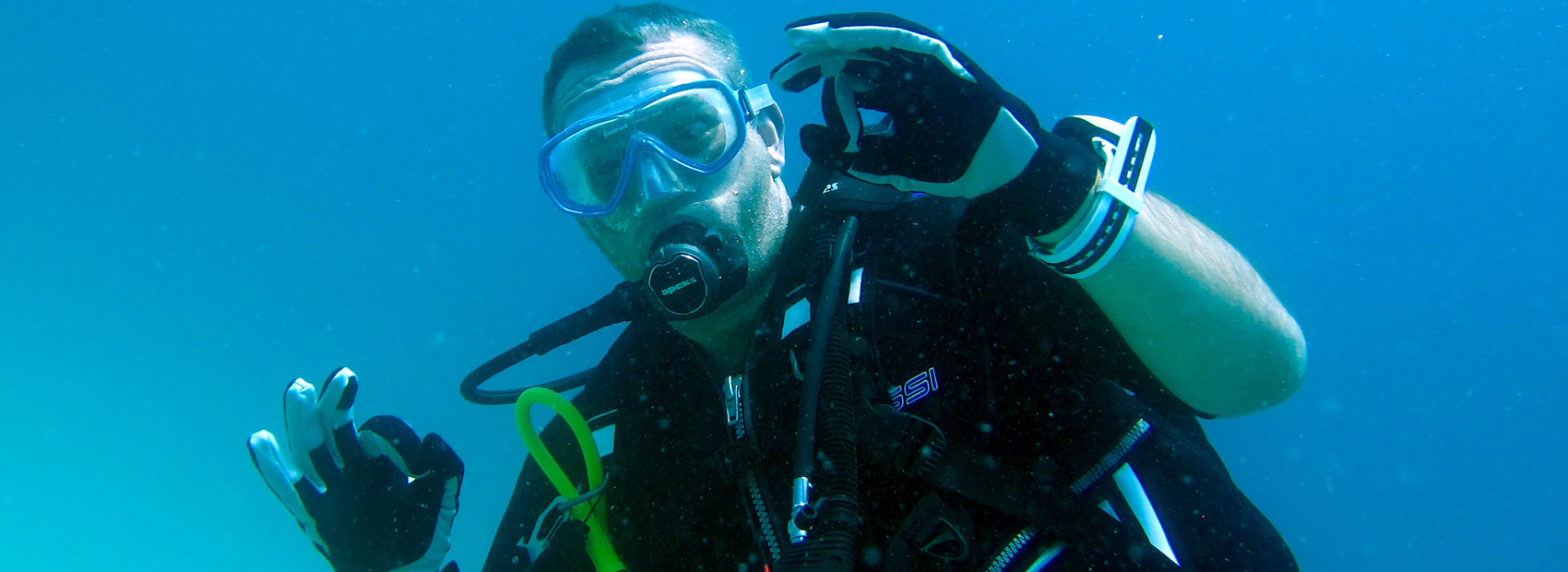
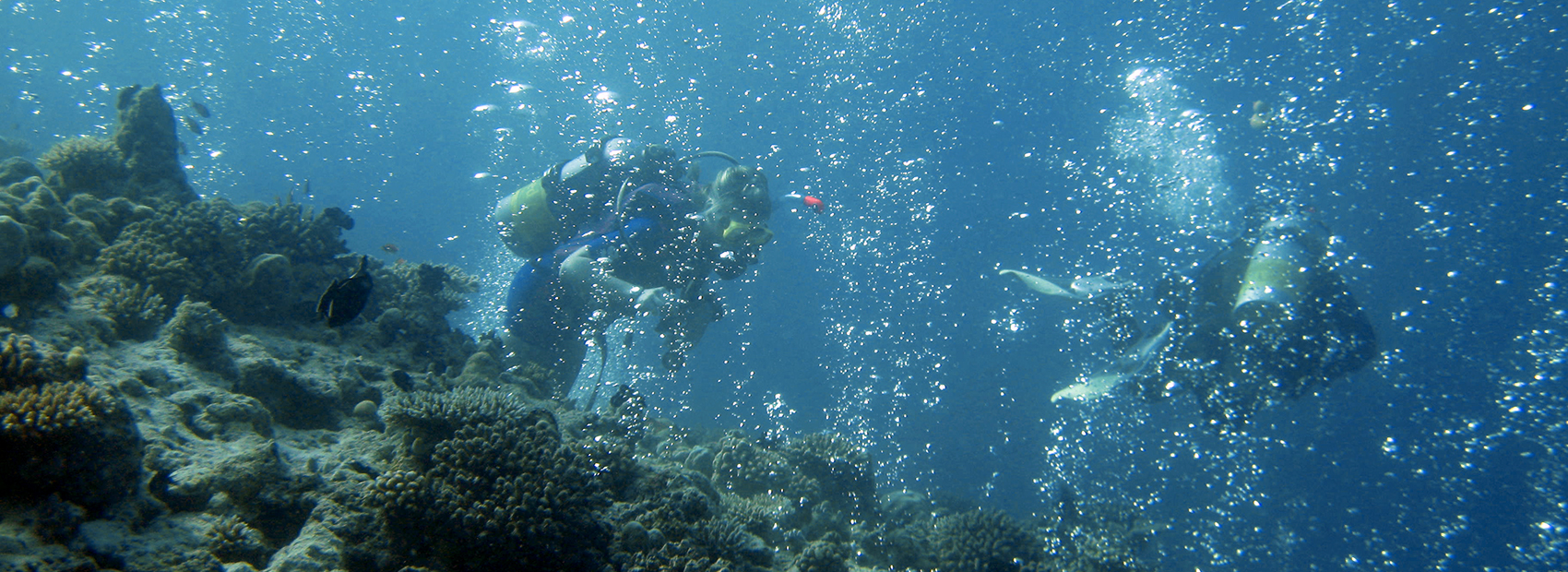
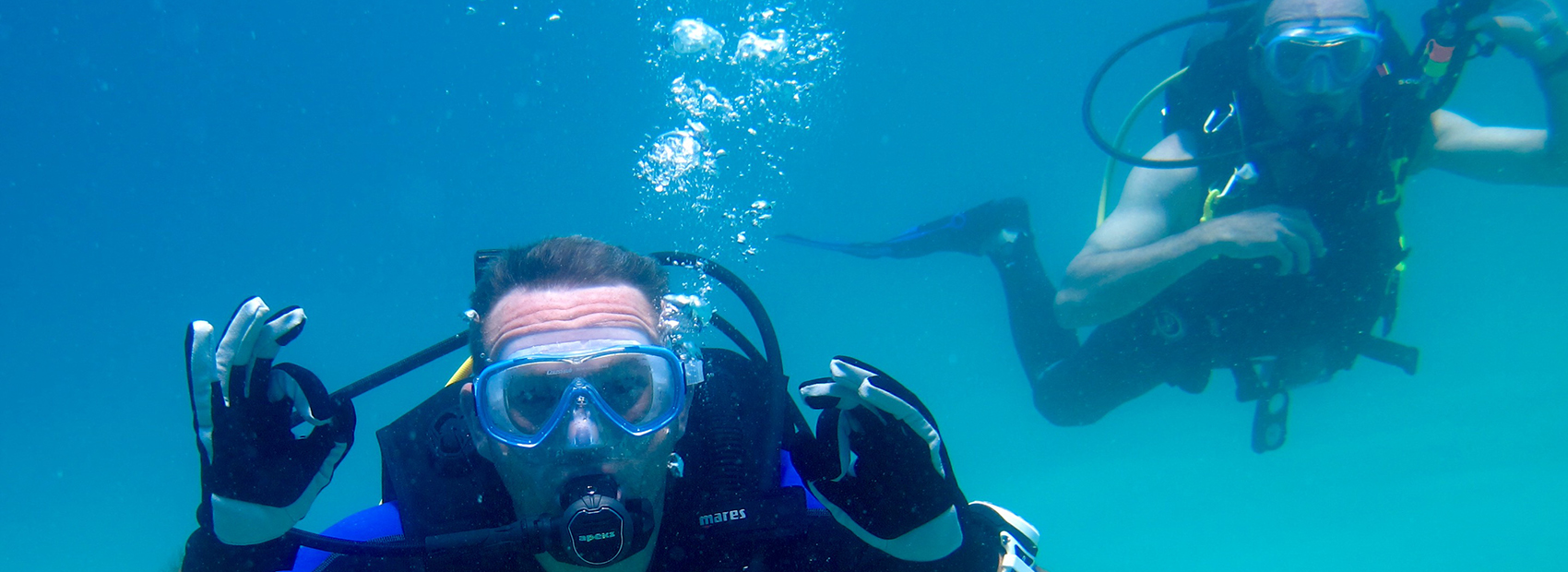
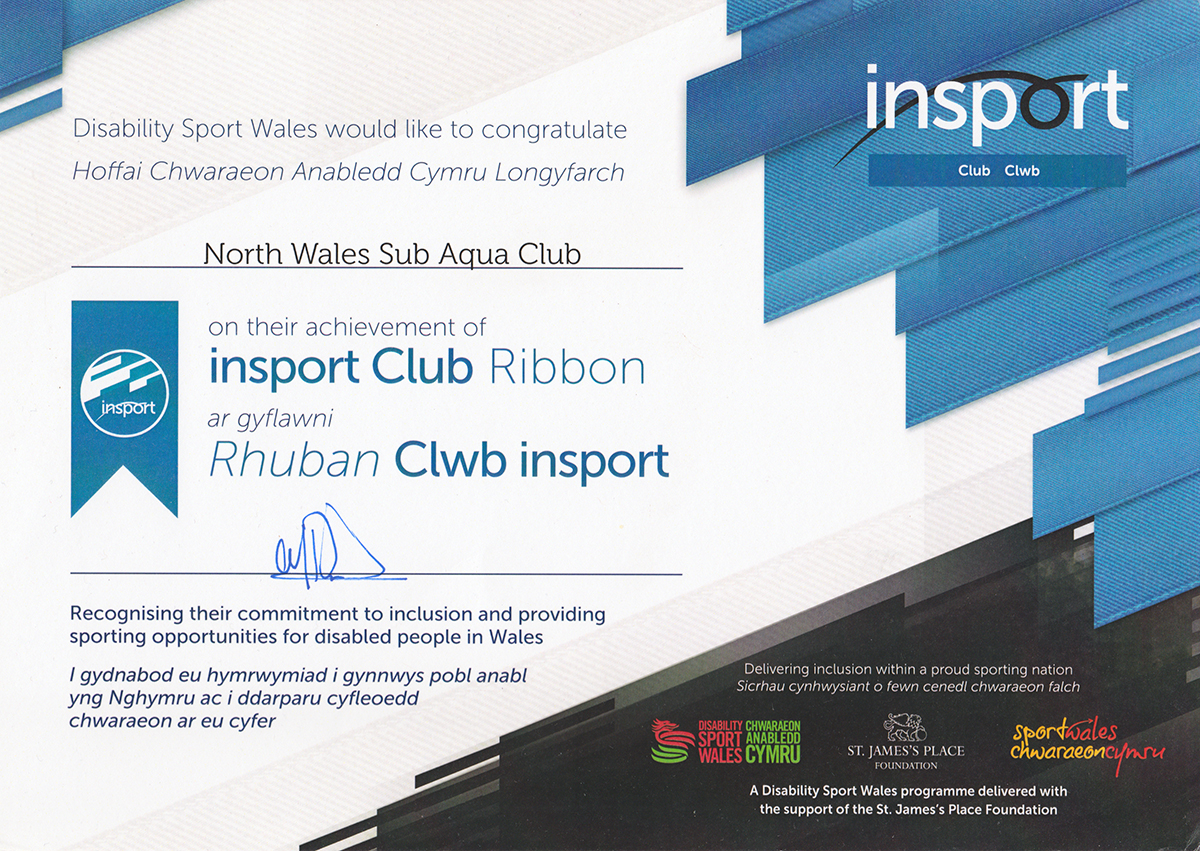
North Wales Sub Aqua Club are an affiliate club of the SAA - Sub Aqua Association. We offer SCUBA diver training in a friendly but professional manner to the whole community. We are based in Llandudno, North Wales and have some of the UK's best dive sites within easy reach.


We are pleased to anounce that we will be hosting a talk by Mr Ian Cundy of the Malvern Archaeological Diving Unit on Saturday 20th of March.

  • Date - Saturday, 20th March.
  • Time - Doors open 7PM, Presentation begins 8PM.
  • Location - Llandudno Sailing Club*.
  • Entrance - Free.
The talk will provide an introduction to Maritime Archaeology in general and the Nautical Archaeology Society. Ian will also talk about the work he has been carrying out on the protected wreck "The Diamond" in Cardigan Bay. This event promises to been extremely to anyone with even the slightest interest in the waters around our country. Mr Cundy has been a diver for 17 years, the presentation will be by a diver, and aimed directly at divers. He lives in Malvern in Worcestershire, where he runs the Malvern Archaeological Diving Unit. MADU is a loose group of divers that have an interest in archaeology.
"We take on maritime archaeological projects ourselves, and turn out to assist anyone who needs help, advice or assistance in the field of maritime archaeology. Several members of MADU are also tutors for the Nautical Archaeology Society (NAS), and in this guise we run one and two day courses on 'Foreshore and Underwater Archaeology' predominantly for divers."
Ian has been working on maritime archaeology sites, both in the UK and abroad for appriximately 12 years and in recent times has held various licences both from English Heritage and CADW for the Welsh Assembly, to work on protected sites off Lundy Island and in Cardigan Bay. He also holds a BSc in Mechanical Engineering and an MA in Maritime Archaeology.

Could all those interested in attending this event please contact either Dave or George so that we gauge numbers.

*Scroll down for Club address.

As I'm sure some of you may be aware BSAC recently made a change to their policies specifying that their instructors are no longer allowed to teach students using, what is commonly referred to as, a Hogarthian equipment rig. Fortunately the SAA have made no such policy change and a divers equipment configuration is at the individuals discretion. In case some of you are not familiar with the Hogarthian equipment configuration I approached technical diving instructor and author Mark Powell who gave his permission for the following article, originally published in Sports Diver magazine in 2008, to be reproduced on our website. I hope you find it as interesting as I did. Original article images courtesy of Gareth Lock.

Hogarthian Equipment Configuration

If you are on a boat with a group of technical divers you are likely to notice a great deal of similarity in the way their equipment is set up. It doesn’t matter if the diver was trained by one of the major technical training agencies or any of the other smaller agencies there is likely to be a lot of similarity. In many cases their equipment might not just be similar but identical. The reason for this is many technical divers adopt an overall approach to their equipment philosophy. This can be summed up by the phrase KISS which in addition to its traditional meaning of Keep It Simple Stupid can also be interpreted as Keep It Simple and Streamlined. A more detailed approach to equipment configuration is known as the Hogarthian approach and increasingly UK divers are using this approach when setting up their equipment.

The Hogarthian equipment configuration developed out of the North Florida Caving community. The very formal sounding name of “Hogarthian” is in honour of Bill “Hogarth” Main who is credited with bringing together the major parts of the System. Main tried to develop a safer and more efficient system of diving than the confusion of styles that was present at the time. He adopted the technique of breathing from a long hose from cave diving legend Sheck Exley and from this basis Main began applying the "safer and more efficient" philosophy to every component of dive gear. He reduced the amount of gear taken underwater, he removed unnecessary D-rings and clips, and he rearranged his gear to promote efficiency and safety to the extreme. He examined every assumption and convention, and if they were found to be inadequate he changed them. He was one of the first to propose a standardised system where each diver wore the same configuration. This gives the advantage of greatly simplifying repair and allows for swapping of equipment. In addition if your buddy is sing the same equipment as you then you instantly know where everything is and how it works. However Main did not intend his system to be permanently fixed with no allowance for flexibility. Rather he developed his philosophy to be dynamic so that new developments could be incorporated into the system. He also recognised that there is no single configuration that will work in all situations and that the proper configuration for a warm water cave dive, for example, is different than that used for a cold water wreck dive in the English Channel.

The Hogarthian style was quickly adopted by most of the Florida cave diving community and now most cave divers in this area dive in this style. It also began to spread beyond this starting point. Many other cave divers around the world started to adopt the same system. Other areas of technical diving including wreck diving also started to adopt some are all of the Hogarthian system. Wreck penetration diving has many features in common with cave diving and wreck divers also started to adopt this style of diving. There were some exceptions. On the North East coast of the United States a different configuration style had been developed and there were a number of discussions of the merits of a “cave style” versus “NE wreck style”. However the advantages of the Hogarthian style gradually won round a large number of divers and it is now considered the norm in many US diving communities. The UK was also a different story. UK cave diving is very different from US cave diving and the equipment requirements are also very different. For this reason UK cave diving could never adopt the same style of diving which meant that there wasn’t the same foothold for Hogarthian diving to break into the country. As a result UK technical diving equipment initially developed along quite a different route. It wasn’t until communications within the technical diving community improved through dedicated newsletters and in particular the internet that awareness of the Hogarthian system began to be noticed. It was the introduction of the Do It Right (DIR) movement in the UK that brought the Hogarthian system more into the limelight. The DIR group are the most rigid followers of the Hogarthian system and this has led to the incorrect assumption in the UK that the Hogarthian style was introduced by the DIR group. In fact most of the leading Technical Instructors in the UK use the Hogarthian system irrespective of the agency they teach for.

The Hogarthian style is focused on simplicity and efficiency. It focuses on carrying sufficient safety equipment without carrying unnecessary clutter and as such is more a philosophy than a recipe book. However there are some key components that make up a Hogarthian configuration.

Rather than a traditional BCD the Hogarthian configuration uses a backplate, wing and harness. This type of setup has a number of advantages. A suitably sized, unbungeed wing provides buoyancy in the same location as the twinset and so is more effective at counteracting the weight of the twinset. Having the buoyancy behind the diver but next to the twinset helps to support the weight of the twinset and lifts the twinset off the divers back. All of this means that a wing is usually considered a more comfortable way to provide the buoyancy required for a twinset. A simple one-piece harness made from a continuous length of webbing is used. This reduces the clutter around the front of the diver when compared to a standard BCD and increases their streamlining in the water. The harness should be properly fitted and adjusted so that the diver can easily reach heir manifold in order to be able to carry out a shutdown if needed.

Single cylinders can be used for shallow recreational dives with a Hogarthian configuration. Single cylinder wings are available and the backplate and harness configuration will be unchanged. However for deeper dives and any decompression dives a manifolded twinset is preferred. Manifolded twinsets are preferred to independents due to the complexity of air sharing rules when using independents. The use of inverted cylinders is also discouraged due to the complexity of configuring the hose routings.

One of the most distinctive aspects of a Hogarthian configuration is the use of a long hose on the primary regulator. A typical recreational diver will have their main regulator and then an ‘octopus’ regulator which can be donated to their buddy in case of emergency. This octopus reg is often, but not always, on a slightly longer hose than the main regulator. The Hogarthian configuration uses a much longer hose, from 1.5m to 2m in length and it is placed on the primary regulator rather than the octopus. There are a number of reasons for this. In an out of air situation in a wreck, cave or even during an ascent on a decompression dive the use of a long hose enables you to be slightly further away from your buddy. If you try to ascend while breathing off your buddy’s short hose, you will need to be very close together. Sending up a delayed SMB, controlling the ascent and holding a safety stop are much more difficult when you are very close together and ‘in each others faces’. Combined with the stress of the initial OOA this can be enough to turn a difficult situation into a full blown incident. A long hose gives you the space to perform all of these tasks with enough room to remain comfortable and composed. Once you have passed over your regulator and deployed your long hose you can maintain your normal in-water position and the ascent is then no more difficult than if your buddy was breathing their own regulator.

The long hose could go on the octopus but the Hogarthian configuration puts the long hose on the primary regulator. This is because in the case of an out of air situation the diver would plan to donate the regulator in their mouth. This is not what the majority of divers were taught on their entry level course so why this method should be adopted? The first reason for donating the regulator in your mouth is that you know this regulator is working. The out of air diver will be under stress and putting a working regulator in their mouth is the quickest way to calm them down. Another reason is that many people believe that an out of air diver is more likely to take the regulator from your mouth rather than hunting around for an octopus.

The last reason is that technical divers frequently carry multiple cylinders. These cylinders carry gasses which are only breathable at certain points of the dive. If you breathe the gas at the wrong depth then Oxygen toxicity could be a very real risk. We know that the regulator in our mouth always contains breathable gas and so by donating this regulator we are ensuring that the out of air diver is getting a safe source of gas.

Of course if we donate our regulator then that leaves us with no regulator in or mouth. This is not a situation that we want to be in for very long. If we now need to start hunting around for our backup, ensuring that we don’t take a deco gas regulator by mistake, then we are just moving the problem along from the out of air diver to ourselves. For this reason a diver using the Hogarthian configuration does not store his backup in his pocket, dangling by his hip or clipped somewhere on his chest but instead he stores it on a bungee around his neck. This means that once they have donated their primary it is just a question of ducking the head and putting the bungeed backup into their mouth.

The excess length of the long hose is stored by “wrapping” it around the body. The hose passes down behind the wing on the right hand side, around the right hip, across the chest from right to left and behind the head. There is a common misconception that it goes around the neck. This is not true as it would be dangerous to have the hose fully around the neck. By having the hose on the back of the neck it id held in position but can be released by ducking the head and/or flicking the hose off the head. This method of storing the hose is known as a Hogarthian loop or it is often shortened to “Hog Loop”.

The use of a long hose is closely associated with technical diving and is often seen in conjunction with a twinset. However a long hose is not restricted to a twinset and it is possible to use this configuration even on a recreational single cylinder set up.

Other equipment and accessories should be firmly attached to the body or stored in pockets. This is to avoid any dangling equipment that could get snagged or damaged. Dangling consoles, regulators, DSMBs, reels or any other equipment are to be avoided. A single pressure gauge, as opposed to gauge consoles is used and this is attached to the left hand hip D-ring by a boltsnap.

Hogarthian divers use torches for signalling and so require a powerful primary torch. A canister torch is preferred as this allows a small light head to be carried easily. A Goodman handle is used so that the diver can hold the torch in his hand without loosing the ability to use that hand for other tasks. The canister torch is mounted on the waist strap on the right hand side of the body. Backup lights are also carried and should be streamlined by attaching to the shoulder D-rings with a boltsnap and are then held in position along the harness by surgical tubing or inner tube.

The idea behind the Hogarthian configuration is to try to be equipped to deal with realistic emergencies rather than prepare for every possible emergency. This is based on the view that most accidents don't happen as a result of equipment failure. Instead most accidents are due to the diver failing to adequately prepare. This can be as a result of not properly cleaning and servicing their equipment, or by overweighting themselves with too much equipment, or by configuring their equipment in a manner that is confusing, or by failing to practice basic skills. This means that the Hogarthian configuration is not just about the equipment configuration but the attitude that goes with it. Being properly trained for the type of diving you are carrying out, strong buddy or team diving skills, good buoyancy control, regular practice of basic skills and maintaining a good level of fitness are as much a part of the Hogarthian approach as simply adopting the equipment configuration.
__________________

Article written by:
Mark Powell
Dive-Tech: Technical Diver Training
http://www.dive-tech.co.uk
Deco For Divers by Mark Powell A divers guide to decompression theory and physiology

Images courtesy of:
www.techdivenz.com
www.sfdj.com
Gareth Lock
www.imagesoflife.co.uk

Happy new year everyone!
Firstly I'd just like to let you all know that the club's AGM is to be held on Sunday 14th of February at 8pm in the Sailing Club. Ofcourse all members are welcome and if anyone has any issues they would like raised could they please present them in writing to the club secretary, George Robinson atleast 28 days before the meeting.
Also we'd just like to thank Gary Williams, Carl Jones, Dave Robinson and Cliff Brown for braving the cold last Thursday night getting all of the cylinders ready to send to CTS for testing. A special thanks to Cliff who took a few hours off work to drive them all the way there. Also Carl, Andrius, Dave and Andy took advantage of the lack of cylinders in the shed and extended the back wall to allow for more storage space. We also have a posh new floor in there and an enormous shelf, perfect for stacking old junk on.
Please remember that if you're cylinders were included in the collection sent to CTS in Liverpool for testing you will need to write a check for the amount owed when the cylinders are returned. We will have an itemised invoice outlining exactly what is owed on each cylinder.

Subscribe to: Posts (Atom)

Online Calendar

Contact Details

North Wales Sub Aqua Club
SAA # 136
Contact: Georgina Robinson on 01492 875701
Email: Click here to e-mail us.
Our clubhouse is marked on the map below by a red tag.


View Dive Site Map in a larger map

Archives